
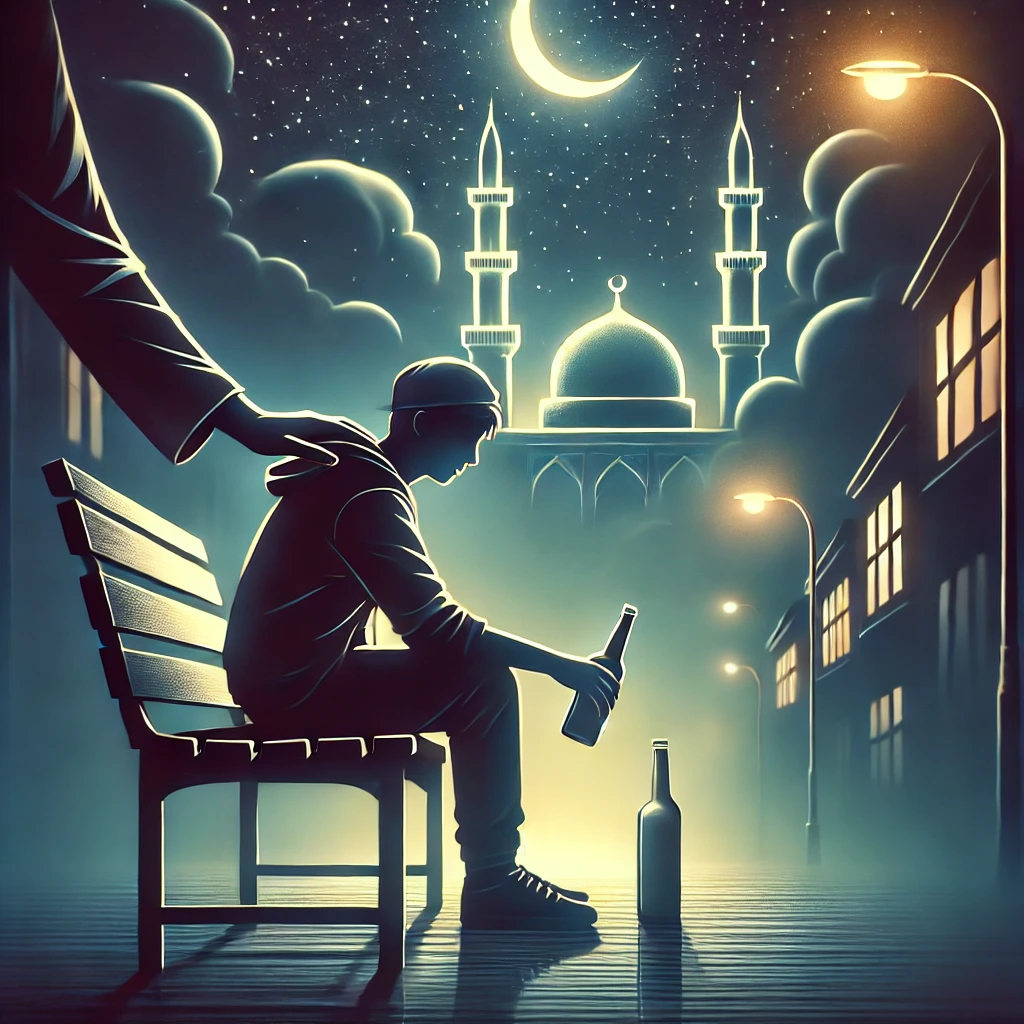
We should dislike intoxicated, not intoxicated persons.
“"If Anyone Drinks Wine Allah Will Not Accept Prayer From Him For Forty Days, But If He Repents Allah Will Forgive Him[...]"
[ Al-Tirmidhi Hadith 3643]
Drinking alcohol would your prayers be accepted? Have you ever heard that alcohol stays in the blood for 40 days? Would you have to make up the prayers that are not accepted because you are alcoholic and intoxicated?
Did you ever think about it?
Drinking wine or other intoxicants and get intoxicated is a major sin. In order for one to get rid of the sin, one involves in sincere repentance. This ruling is established by scholarly consensus.
Allah says in the Qur’an:
“O you who have believed, indeed, intoxicants, gambling, [sacrificing on] stone alters [to other than Allah ], and divining arrows are but defilement from the work of Satan, so avoid it that you may be successful. Satan only wants to cause between you animosity and hatred through intoxicants and gambling and to avert you from the remembrance of Allah and from prayer. So will you not desist?" [Surah Al-Maidah 90:91]
Prohibition of Drinking Intoxicants in Islam
The legal reason for the prohibition of drinking wine is because it is a drink that intoxicates. Thus, any drink that results in intoxication is also forbidden to consume, like many modern-day alcoholic beverages. [al-Asadi, al-Mujiz]
Drinking wine is a major sin, even if one consumes only a drop. [Dhahabi, Kitab al-Kaba’ir]
They ask you about wine and gambling. Say, "In them is great sin [….] [Surah Baqara: 219]
Alcohol has been the scourge of human society since time immemorial. It continues to cost countless human lives and causes terrible misery to millions throughout the world. Alcohol is the root cause of several problems facing society. The statistics of soaring crime rates, increasing instances of mental illnesses, and millions of broken homes throughout the world bear mute testimony to the destructive power of alcohol. Allah has described intoxicants among other things as being appalling, despicable, and hateful acts of the devil and he has commanded us to abstain from them.
Explanation of the Hadith About intoxicated Person:
“Why Prayers not accepted of an intoxicant?”
The prayer is the best form of worship performed by the body. Therefore, if it is not accepted, then what is lesser than this in worship is also intended. The reason 40 days were specified is that wine is said to stay in the body, the veins, and the nerves for this amount of time. [al-Manawi, Fayd al-Qadir]
Acceptance of Prayers of Intoxicated Person:
The above-mentioned hadith indicates that one who drinks intoxicants will not receive the reward for the prayers performed for 40 days unless one repents. It does not mean that the prayers are invalid and need to be made up because they are missing a condition of validity. [ibn al-Najar, al-Kawkab al-Munir]
Rather, it demonstrates the beauty of Islam because even if one wronged themselves, there is still hope for forgiveness and making a new beginning.
Allah says in the Quran:
“Say, O My! servants who have transgressed against themselves [by sinning], do not despair of the mercy of Allah. Indeed, Allah forgives all sins. Indeed, it is He who is the Forgiving, the Merciful." [Surah Az-Zumar 39:53]
Engage in Repentance
If one commits a major sin, sincere repentance is the only thing that can absolve one from it. Sincere repentance entails four conditions:
a. One leaves the sin,
b. One feels remorse for the acts committed,
c. One resolves to not return to it, and
d. One pays back or returns what one owes if the sin involves the rights of others.
No one should ever despair Allah’s mercy if they’ve truly repented. He is the only One who can forgive us for the wrong we willingly commit. He is oft-Forgiving, Most Merciful.
Allah says in Qur'an:
And [saying], "Seek forgiveness of your Lord and repent to Him, [and] He will let you enjoy a good provision for a specified term and give every doer of favor his favor. But if you turn away, then indeed, I fear for you the punishment of a great Day” [Surah Hud 11:3]
Intoxication may seem like a fleeting escape, but its disadvantages loom far larger than the momentary high. Parents, consider the long-term effects: impaired judgment can lead to poor decisions that jeopardize your family's safety and well-being. The risk of addiction creeps in quietly, turning a casual indulgence into a devastating cycle. By choosing to stop, you reclaim not just your clarity, but also pave the way for a healthier, more vibrant life for you and your loved ones.
In navigating the complex landscape of intoxication, it’s essential for parents to foster open dialogues with their children about the potential risks and consequences. By prioritizing communication, education, and positive role modeling, we can empower our kids to make informed choices. Remember, it’s not just about saying “no” to substances; it’s about saying “yes” to healthy lifestyles and meaningful experiences. Let’s create an environment where our children feel safe to discuss their challenges and triumphs, ensuring they understand that avoiding intoxication is not merely a rule, but a path to a vibrant and fulfilling life. The conversations we initiate today can shape the choices they make tomorrow.
A Call to Consciousness
The issue of intoxication is not merely a matter of personal indulgence but a spiritual, moral, and social concern that impacts the fabric of families and communities. Islam’s prohibition against intoxicants is not to limit enjoyment but to safeguard the purity of our hearts, the clarity of our minds, and the safety of our society. Engaging in intoxicants clouds judgment, weakens spiritual connection, and opens the door to countless harms. By adhering to the guidance of Allah and His Messenger (peace be upon him), we protect ourselves from these dangers and draw closer to our Creator.
Intoxicated Second Chance
It is important to remember that Islam is a religion of hope and redemption. For those who have faltered, Allah’s mercy is vast, and the door to repentance is always open. Sincere repentance, accompanied by a commitment to change, has the power to erase past sins and bring about a brighter, more fulfilling future. Every moment is an opportunity to turn back to Allah, to reclaim purity, and to seek His forgiveness. No matter how far one has strayed, there is always a chance to return to the path of righteousness.
Building a Legacy of Sobriety
Avoiding intoxicants is not just an individual responsibility but a communal one. By promoting awareness and fostering a culture of sobriety, we can create environments that uplift and inspire. Parents, educators, and leaders must work together to teach the next generation about the values of self-control, mindfulness, and spiritual devotion. By embodying these principles in our own lives, we can become role models who inspire others to choose clarity over confusion and righteousness over regret.
A Path to a Better Life
Ultimately, rejecting intoxicants is not just about avoiding sin—it’s about embracing a better life. It’s about being present for our families, strengthening our bond with Allah, and living with purpose and intention. Every prayer, every act of dhikr, and every step away from harmful habits is a step toward a more meaningful existence. Let us commit ourselves to this path, not out of fear, but out of love for our Creator and a desire to live as He has intended for us—a life of peace, clarity, and unwavering faith.